Air conditioning in Irish homes is no longer just a luxury add-on for large houses or high-end apartments. As homes become better insulated, more airtight and increasingly fitted with large areas of glazing, many homeowners are starting to experience uncomfortable summer temperatures, especially in bedrooms, home offices, open-plan living areas and south-facing rooms.
At the same time, expectations around comfort are changing. Homeowners want each room to feel right, without having to manually adjust multiple AC remotes, thermostats or standalone controllers. This is where residential air conditioning zoning becomes a serious opportunity for modern homes in Ireland.
KNX offers a flexible, professional and future-proof way to control zoned air conditioning, heating, ventilation, blinds and wider smart home functions from one integrated system.
What Is Air Conditioning Zoning?
Air conditioning zoning allows different rooms or areas of the home to be controlled independently. Instead of treating the whole house as one temperature zone, each space can have its own setpoint, schedule and operating mode.
For example, a typical home might have:
- Bedrooms cooled gently at night
- A home office controlled during working hours
- Open-plan living areas managed separately from the rest of the house
- Guest rooms switched off when not in use
- South-facing rooms cooled earlier to prevent overheating
- AC linked with blinds to reduce solar gain before cooling is required
This creates a more comfortable and more efficient home. The system only needs to condition the areas that require it, rather than running everything at once.
Why Zoning Matters in Irish Homes
Ireland’s climate is changing, but Irish homes are also changing. Modern building standards have improved insulation and airtightness, which is excellent for reducing heating demand in winter. However, in summer, the same homes can hold heat for longer.
Large windows, rooflights, open-plan layouts and increased use of home offices all add to the problem. A room that overheats in the afternoon may need cooling, while another room on the shaded side of the house may be perfectly comfortable.
A simple on/off air conditioning installation does not properly deal with this. Zoning gives the homeowner control where it is actually needed: room by room.
Why Use KNX for Air Conditioning Zoning?
KNX is an international open standard for smart home and building control. Unlike closed systems that focus on one brand or one product range, KNX allows different parts of the home to work together.
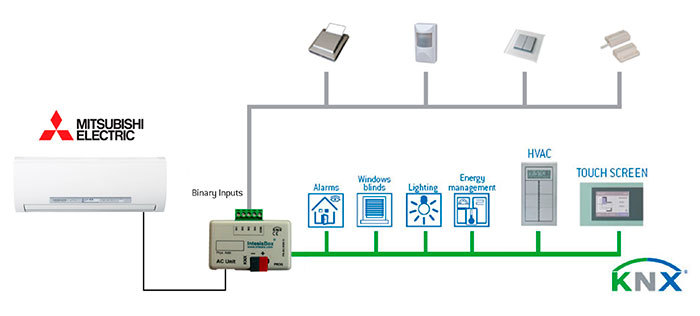
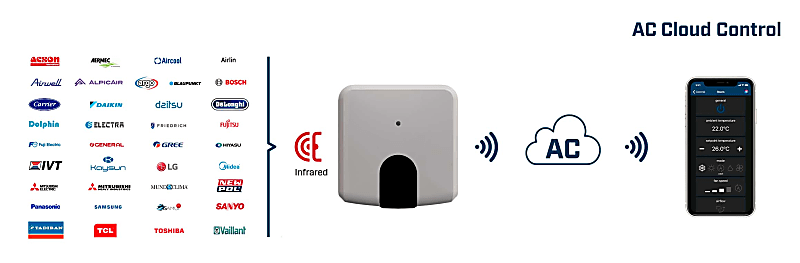
With the right KNX interface or gateway, air conditioning units can be integrated into the wider smart home system. This means the AC is no longer controlled in isolation. It can work alongside lighting, blinds, underfloor heating, radiators, ventilation, occupancy sensors, window contacts, energy monitoring and visualisation screens.
This is where KNX becomes especially powerful for residential air conditioning zoning.
Two-Way Communication with AC Units
A major benefit of a professional KNX air conditioning integration is two-way communication.
Basic control systems may only send a command, such as “turn on” or “set to 21°C”. KNX integration can go much further, depending on the AC manufacturer and gateway used.
Typical two-way control can include:
- On/off control
- Heating, cooling, dry and fan modes
- Temperature setpoint adjustment
- Fan speed control
- Vane or louvre position
- Actual room temperature
- Unit operating status
- Fault or error feedback
- Confirmation that commands have been received
- Central control from touchscreens, apps or wall sensors
This means the homeowner and installer can see what the air conditioning system is actually doing, not just what it was told to do.
Zoning for Ducted, Split, Multi-Split and VRF Systems
Residential air conditioning zoning can be designed in different ways depending on the property and the AC system.
For some homes, individual wall-mounted or ducted indoor units may be installed in each important room. For larger properties, multi-split or VRF systems may be used. In ducted systems, motorised dampers can be used to control airflow to different zones.
KNX can sit above these systems as the main control layer, giving homeowners a consistent interface and giving installers a flexible platform for automation.
This is particularly useful in high-end homes, apartments, extensions, garden rooms and self-build projects where heating, cooling, shading and ventilation all need to work together.
Smarter Cooling with Blinds, Sensors and Schedules
The most efficient cooling strategy is not always to switch the AC on earlier. Sometimes the best approach is to prevent the room from overheating in the first place.
With KNX, air conditioning can be linked to:
- Motorised blinds and curtains
- Presence sensors
- Window contacts
- Room temperature sensors
- Weather stations
- Time schedules
- Energy monitoring
- Home/away modes
For example, if a south-facing living room is starting to warm up, KNX can lower the blinds slightly before the room overheats. If a window is open, the AC can be paused. If the room is unoccupied, the setpoint can relax automatically. If the homeowner selects “Away”, the full system can move into an energy-saving mode.
This is the difference between simple AC control and intelligent climate control.
Talk to KNX Ireland
Planning a residential air conditioning or smart home project?
Contact KNX Ireland to discuss KNX-based zoning, AC integration and smart climate control solutions for homes across Ireland.